


Canada’s April 2026 Immigration Updates explained clearly. Learn about passport fee increases, super visa changes, PR fees, and new immigration rules affecting you.

Canada’s April 2026 Immigration Updates: 9 Critical Changes You Must Know Today

Canada’s April 2026 Immigration Updates by Trenity Consultants

Canada’s April 2026 Immigration Updates: 9 Critical Changes You Must Know Today

If you’ve been following Canada’s immigration landscape, April 2026 has been a highly active period. Immigration, Refugees and Citizenship Canada (IRCC) introduced several updates that impact applicants, families, employers, and permanent residents alike.

Some of these changes may seem small at first glance, but they can significantly affect your immigration journey depending on your current stage.

At Trenity Consultants, we’ve simplified everything for you. Below is a clear breakdown of Canada’s April 2026 immigration updates and what they mean for you.

Canada's April 2026 Immigration Updates: What's Changing and Who It Affects

If you’re planning to move to Canada or already in the middle of an application, April 2026 is a month worth paying close attention to. Canada’s April 2026 immigration updates touch everything from citizenship costs to how provinces select their nominees.

1. Canada Passport Fees Increased After 13 Years

For the first time since 2013, Canada has increased passport fees.

New Passport Costs (Effective March 31, 2026):

  • 10-year adult passport: $163.50 (previously $160)
  • 5-year adult passport: $122.50 (previously $120)

Although the increase is modest, it applies to:

  • Applications inside Canada
  • Applications from abroad
  • All travel document types

Why the Increase?

IRCC states the hike is due to:

  • Inflation
  • Rising production costs for secure travel documents

Important: Passport fees will now be indexed to the Consumer Price Index (CPI), meaning annual increases are expected going forward.

2. New 30-Day Passport Processing Guarantee

Starting April 1, 2026, Canada introduced a major improvement: a 30-business-day processing guarantee.

How It Works:

  • The countdown starts only when your application is complete
  • If IRCC fails to process it within 30 business days:
    • You receive a full refund automatically

Important Tip:

The word “complete” is critical. Missing documents, incorrect forms, or improper photos will delay your timeline.

Always double-check:

    • Application forms
    • Supporting documents
    • Payment
    • Photo specifications

3. Citizenship Fees Slightly Increased

For permanent residents applying for citizenship, there’s a small cost change.

Updated Fees:

  • Right of Citizenship Fee: $123.00 (up from $119.75)
  • Processing fee: $530 (unchanged)

What This Means:

  • Annual fee adjustments are now legislated
  • Expect small yearly increases instead of large jumps

Plan your application budget accordingly.

4. Super Visa Becomes More Flexible for Families

This is one of the most impactful updates in April 2026.

The Super Visa allows parents and grandparents to

  • Stay in Canada for up to 5 years per visit
  • Hold a visa valid for up to 10 years

New Improvements:

Flexible Income Requirement

Sponsors can now use the following:

  • Income from the last 2 tax years (instead of just one)

Combined Income Option

If the sponsor falls slightly short:

  • The visiting parent/grandparent’s income can help meet requirements

Why This Matters:

  • Helps families with fluctuating income
  • Makes reunification easier
  • Expands eligibility significantly

5. Provinces Gain More Power in Immigration Decisions

Effective March 30, 2026, provinces now have greater authority in the Provincial Nominee Program (PNP).

Key Changes:

Provincial governments now assess:

  • Applicant’s intent to settle in the province
  • Ability to establish economically

What Changed?

Previously:

  • Federal officers could override decisions

Now:

  • Provinces have the final say
  • Federal officers must consult provinces before rejecting nominations

What This Means for You:

  • Stronger focus on genuine settlement plans
  • Generic answers will no longer work

Be specific about:

  • Why you chose the province
  • Your job prospects
  • Community ties

6. Settlement Services Now Have a Time Limit

Canada has introduced limits on how long immigrants can access settlement support.

New Rules:

  • Access period: 6 years after PR status (starting April 2026)
  • Reduced to 5 years starting April 2027

Services Affected:

  • Language training
  • Job assistance
  • Integration programs

Why This Change?

The government aims to:

  • Encourage faster integration
  • Align with Budget 2025 priorities

If you’re already a PR, check how much time you have left.

7. Rural Employers Get More Hiring Flexibility

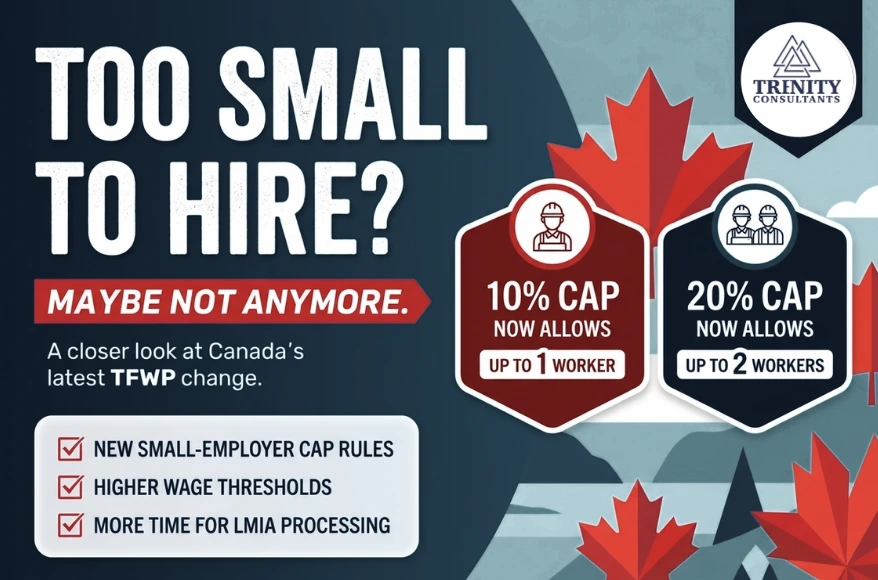
To address labor shortages, Canada has expanded hiring capacity in rural areas.

Temporary Foreign Worker Program Update (2026–2027):

  • Workforce cap increased from 10% to 20%
  • Applies to low-wage stream employers

Who Benefits?

  • Rural businesses
  • Foreign workers seeking opportunities outside major cities

This opens doors for:

  • Faster hiring
  • More job opportunities in smaller communities

8. Saskatchewan Introduces New Immigration Fees

The Saskatchewan Immigrant Nominee Program (SINP) now includes application fees.

New Costs (Effective April 1, 2026):

  • Application fee: $500
  • Review request: $250

Important Note:

  • Applications submitted before April 1 are exempt

If you’re applying now, factor this into your budget.

9. Permanent Residence Fee Increase Coming Soon

Another important update is scheduled for late April.

Upcoming Change (April 30, 2026):

  • Right of Permanent Residence Fee:
    • $600 (up from $575)

Pro Tip:

Submitting your application before April 30 can save you money.

What These Immigration Changes Mean for You

Overall, Canada’s April 2026 immigration updates reflect three key trends:

  1. Faster Processing
    • Passport guarantee introduced
    • Efficiency improvements
  1. More Provincial Control
    • Provinces now drive nomination decisions
  1. Stronger Economic Alignment
    • Focus on labor shortages
    • Better integration timelines

Conclusion: Stay Ahead of Canada’s Immigration Changes

Canada’s April 2026 immigration updates may seem incremental, but they carry real implications. From fee increases to stricter provincial assessments, the system is becoming more precise and efficiency-driven.

The key takeaway?

  • Attention to detail is more important than ever.

Whether it’s submitting complete applications, planning finances, or preparing strong settlement plans—small mistakes can lead to delays.

If you’re unsure how these updates affect your situation, professional guidance from Trenity Consultants, the experienced immigration consultants for Canada in Abu Dhabi, UAE, can make all the difference.

Need Help With Your Immigration Plan?

Connect with Trenity Consultants, ICCRC-certified immigration consultants in the UAE and GCC, today for expert guidance tailored to the latest Canadian immigration policies and updates.

FAQs About Canada’s April 2026 Immigration Updates

Why did Canada increase passport fees in 2026?

The increase is due to inflation and higher production costs. Fees will now adjust annually based on CPI.

Can I still qualify for a Super Visa with lower income?

Yes, you can now use income from two years or combine income with your parents.

What happens if my passport is delayed beyond 30 days?

You will automatically receive a full refund—provided your application was complete.

Are settlement services still free in Canada?

Yes, but they are now limited to 5–6 years after becoming a permanent resident.

Do provinces now fully control immigration nominations?

They have significantly more authority, especially in assessing settlement intent.

Should I apply for PR before April 30, 2026?

Yes, applying earlier helps you avoid the fee increase.

Share:

How to Strengthen Your Canada Immigration Application

Canada Immigration Policies Update 2025: Stay Ahead & Avoid Visa Refusal

Avoid Canada Visa Refusal 2025 - Chekout new immigration policies update!

Canada’s New Immigration Policies 2025: How to Avoid Visa Refusal

Getting into Canada in 2025 is more challenging than ever. The government has introduced Canada’s New Immigration Tightening Policies 2025, making the process stricter.

Simple mistakes that might have been overlooked in the past can now lead to application refusal. The new rules mean you must be extremely careful. We’ve compiled a list of the most common reasons for immigration refusals in Canada to help you avoid them.

Facing a visa refusal or want to ensure your application succeeds the first time? Trenity Consultants’ expert team will guide you at every step and help you prepare a strong, approved application.

Top 10 Mistakes That Lead to Visa Refusals

  1. Using Old Advice or Forms

The rules from last year are no longer in effect. Canada is lowering the number of people it accepts. Officers are stricter. Always download the newest checklists and forms directly from the official IRCC website.

  1. A Weak or Unclear Story

You must prove your plans are genuine.

  • For Visitor/Study Visas: You must provide strong evidence that you have a job, family, or property to return to in your home country.
  • For PR/Work Visas: Your education and work history must clearly match the job you plan to do in Canada. If your story doesn’t make sense, they will refuse you.
  1. Small Document Errors

A wrong date, a missing signature, a blurry scan, or an uncertified translation can result in your application being rejected. Double-check every single page.

  1. Thinking PR is Guaranteed After an Invite

Receiving an “Invitation to Apply” (ITA) for Express Entry does not mean you have been approved. Permanent Residency Application Refusals are common. Officers check your job claims using tax records and even social media. Be 100% honest.

  1. Choosing the Wrong Job Code (NOC)

This is a huge mistake. Your job title doesn’t matter—your job duties do. You must match your actual, day-to-day duties to the right official job code (called a NOC/TEER). If you claim the wrong one, you will be refused.

  1. Missing a Deadline

The new online system is automatic. If you are given 30 days for a medical exam or 7 days to upload a document, there are no reminders. If you miss the deadline, your file may be closed permanently. Check your account and email regularly.

  1. Filing “Dummy” Applications to Stay Longer

Don’t submit a weak application just to buy more time in Canada. Officers can spot this easily now. This is considered system abuse and can get you banned from Canada for years.

  1. Messing Up Family Sponsorship

Sponsoring your spouse or parents can be a complex process. If you miss financial documents, forget a signature, or your relationship proof is weak (like undated photos), the system can reject your file instantly.

  1. Beware of Unlicensed “Ghost” Consultants

Be very careful who you hire. Unlicensed agents who promise shortcuts often lead to rejections. If IRCC finds out you paid an undeclared “ghost” consultant, you can be banned. Always hire licensed Canadian immigration consultants and verify their registration number to stay safe.

  1. Ignoring Messages from IRCC

If IRCC sends you an email with a question or concern (often referred to as a “fairness letter”), this is your only opportunity to address it. If you don’t respond in a timely manner, they will decline your application.

How to Get Your Application Approved in 2025

Canada is tightening its rules to manage the housing crisis and stop fraud. This means you must be honest, genuine, and very careful with your application.

For simple cases, you can apply yourself. But with these new rules, a small mistake can cost you your dream.

For peace of mind, consider getting professional help. If you are applying from the UAE, our trusted immigration consultants in Dubai, UAE, for Canada are experts on the new 2025 policies. We can guide you through the process and help you avoid these common refusal traps.

Share:

New Rules for Work Permit in Canada 2025

New Rules for Work Permit in Canada 2025: Everything You Need to Prepare For

New Rules for Work Permit in Canada 2025 - Trenity Consultants

New Rules for Work Permit in Canada 2025: Everything You Need to Prepare For

If you’re planning to live and work in Canada soon, the new rules for work permit in Canada 2025 are something you simply cannot ignore. These changes are expected to go into effect by July 2025, and their direct effects are on the process of hiring, treating and supporting temporary foreign workers nationwide. As a competent professional, or a seasonal worker, it is imperative that you read up on these updates before you start the application process.

This is where many people turn to trusted experts like Trenity Immigration Consultants to simplify the journey and assess your eligibility to immigrate to Canada based on the latest government guidelines.

A Quick Overview of the New Rules for Work Permit in Canada 2025

Uncovered through internal documentation from Employment and Social Development Canada (ESDC), the new rules for work permit focus on the Temporary Foreign Worker (TFW) Program. Workers mobility, wage structure, and housing safety, as well as duties of the employers, are also some of the main areas that the reforms focus on. The changes will be felt by more than 100,000 migrant workers and thousands of employers particularly in agriculture and seafood processing.

What is Changing? 6 Major Reforms That You should be Aware 0f

Sector-Specific Permits:

The 2-year permits made available to industries such as agriculture and fish processing will permit the workers to switch employers in the same industry making them flexible, but only when another job is available.

Employers Wage Deduction:

Now, the employers will have a chance to deduct such things as housing, utilities, and transport expenses out of the wages. This will act as cost-sharing but at the same time it may take away a considerable amount of take-home salaries.

Regulation Changes in Housing:

Indoor temperature control regulations on the housing of workers are likely to be abandoned-a subject of health and comfort considerations, particularly in summer and winter extremes.

More relaxed Transport regulations:

It will also allow employers greater flexibility in organizing the transport to work. But unreliable or unsafe transportation may prove to be a greater problem in rural locations.

Healthcare Responsibilities:

The phraseology of employer-paid healthcare is a grey area and may restrict the ability to access healthcare-particularly in underprivileged or rural communities.

Accelerated LMIA Process:

As a measure to reduce red tape, government is trying to make the LMIA process easier and quicker so that the employers can hire foreign workers.

What Experts Say

  • Although some of the reforms which continues to receive praises include sector specific permits as it offers more flexibility, critics note that the reforms are insufficient. It is widely assumed that in the absence of clear avenues that are well defined, foreign workers stand a risk of exploitation. Advocacy groups want open work permits and more protections to workers so they are treated fairly and have long-term security.

Reside in the UAE? This is What You Need to Know

If you’re applying for a Canadian work permit in 2025 from Abu Dhabi, UAE, it’s important to understand how these new rules could impact your journey. The documents that you will have to provide, whether you can be eligible or not, and the nature of the employers you are depending on can alter. That’s why connecting with professionals who offer reliable Canadian Immigration and Visa Services in Abu Dhabi, UAE can make all the difference. Let Trenity Immigration Consultants guide you step-by-step so you can confidently immigrate to Canada under the new rules.

Share:

IRCC visa refusal policy explanation 2025

IRCC Visa Refusal Policy Explanation 2025: A Bold Step Toward Global Immigration Transparency

A Step to Step guide to IRCC Visa Refusal Policy 2025

IRCC Visa Refusal Policy Explanation 2025: A Bold Step Toward Global Immigration Transparency

The IRCC visa refusal policy is a game-changing update for applicants looking to visit, study, or work in Canada. As of July 29, 2025, Immigration, Refugees and Citizenship Canada (IRCC) has started attaching detailed officer decision notes with refusal letters. This new approach gives applicants valuable insights into the specific Canada immigration refusal reasons, helping them understand exactly why their application was denied.

For years, applicants have faced vague rejection letters that offered little to no clarity. Now, thanks to the IRCC visa refusal policy, this process is becoming more transparent and supportive. If you’re planning to reapply, it’s the perfect time to seek guidance from the Best Canada Immigration Consultants to make sure your next application is successful.

Why the IRCC Visa Refusal Policy 2025 Matters?

Previously, refused applicants received generic letters citing vague reasons such as “ineligibility” or “lack of documentation.” This led to confusion, delays, and costly ATIP requests just to understand what went wrong.

With the new IRCC’s visa refusal policy, officer decision notes now break down critical areas like:

  • Eligibility gaps
  • Missing or incomplete documentation
  • Contextual concerns such as study plans, financial proof, or travel history

This level of visa application feedback Canada helps applicants correct specific issues before reapplying, saving both time and money.

Who Will Receive IRCC Officer Decision Notes?

The initial rollout of the IRCC refusal letter update includes:

  • Temporary Resident Visas (TRVs)
  • Visitor Records
  • Study Permits
  • Work Permits

Please note, applications submitted through the IRCC Portal – New Version are currently excluded from receiving officer notes. To benefit from this new policy, applicants are advised to use alternative platforms.

How Will You Receive These Notes?

Applicants and their authorized representatives (like consultants or lawyers) will now automatically receive the IRCC officer decision notes along with the refusal letter. In some cases, parts of the notes may be withheld for legal or privacy reasons, but the transparency is still a significant improvement over the past.

What This Means for You?

This update to the IRCC visa refusal policy offers several advantages:

  • Better clarity and understanding of refusals
  • More focused and successful reapplications
  • Fewer appeals and ATIP requests
  • Enhanced trust in the immigration process

If your previous application was rejected, this policy provides a clearer path to reapply with stronger documentation.

Looking to turn a refusal into approval? Get expert advice from our Licensed Canadian Immigration Consultants in the UAE and take the next confident step towards your Canadian dream.

Share:

Latest Canada Express Entry Draw Results and Proof of Funds Required for 2025.

New Express Entry Proof of Funds 2025

Latest Canada Express Entry Draw Results and Proof of Funds Required for 2025.

Understanding the New Express Entry Proof of Funds 2025

The latest Express Entry proof of funds 2025 update is here, and it’s crucial for anyone dreaming of moving to Canada. On July 7, 2025, Immigration, Refugees and Citizenship Canada (IRCC) increased the minimum settlement fund requirements for certain permanent residence applicants. If you are applying through specific Express Entry streams, you need to pay close attention to these changes to keep your profile eligible. As your trusted Canada Immigration Consultants, we’ve broken down everything you need to know.

How Much Funds Required for Canada Express Entry 2025?

Effective July 7, 2025, applicants under the Federal Skilled Worker Program (FSWP) and the Federal Skilled Trades Program (FSTP) must meet higher settlement fund thresholds. For instance, a single applicant now needs to show they have $15,263, an increase from the previous $14,690.

Here is the full breakdown of the new fund requirements based on family size:

Number of family members

Funds needed as of July 7, 2025

1 (the applicant)

$15,263

2

$19,001

3

$23,360

4

$28,362

5

$32,168

6

$36,280

7

$40,392

For each additional member

$4,112


It is essential to update your profile with the new Express Entry proof of funds 2025 to remain eligible for an Invitation to Apply (ITA). The deadline to update your Express Entry profile is July 28, 2025.

Who Needs to Show Proof of Funds?

If you are a skilled worker, international student, or temporary resident looking to make Canada your permanent home, now is the time to take action. Monitor revisions to PGWP and SOWP laws, investigate new work permit prospects under the most recent FTAs, and stay informed about developments related to the permanent Economic Mobility Pathway. Improving your CRS score will also be required to take advantage of the current Express Entry improvements.

Calculating Family Size and What Counts as Proof

The requirement for Express Entry proof of funds 2025 primarily applies to those in the FSWP and FSTP pools.

However, you do not need to provide proof of funds if you:

  • Are applying under the Canadian Experience Class (CEC).

  • Have authorization to work in Canada AND a valid job offer, even if you are an FSWP or FSTP candidate.

Even if you are exempt, IRCC advises that you keep your funds updated. The Express Entry system may find you eligible for more than one program, and having updated funds ensures you don’t miss any opportunities. If you are exempt, you must upload a letter explaining why (e.g., you received an invitation under the CEC or you have a valid job offer).

IRCC has a specific way of calculating your family size. You must include:

  • Yourself (the main applicant)

  • Your spouse or common-law partner

  • Your dependent children

  • Your spouse’s or partner’s dependent children

  • A dependent child of a dependent child

You must include these family members in your calculation even if they are Canadian citizens or permanent residents, or if they are not immigrating to Canada with you.

To prove you have the required funds, you must get official letters from your bank or financial institution. These letters must be on the institution’s official letterhead and include:

  • The institution’s contact information (address, phone, email).

  • Your name.

  • A list of any outstanding debts, such as loans or credit card debt.

  • Detailed information for each current banking and investment account: account numbers, the date each account was opened, the current balance of each account, and the average balance for the past six months.

You must have ready access to this money both when you apply and when a permanent resident visa is issued.


Navigating these new requirements can be complex, but you don’t have to do it alone. Ensuring your application for the Express Entry proof of funds 2025 is accurate and complete is our top priority. For personalized guidance and expert assistance, connect with the Top Immigration Consultants in Abu Dhabi, UAE, and let us help you make your Canadian dream a reality.

Share:

IRCC IMMIGRATION UPDATES

IRCC Immigration Updates

IRCC Immigration Department Plan 2025-2026

Canada Immigration Plan 2025-26: A New Era in Canadian Immigration

The Canada Immigration Plan 2025-26 is now available, representing a significant shift in how Canada welcomes immigrants. Immigration, Refugees and Citizenship Canada (IRCC) has released its 2025-2026 Departmental Plan, which includes substantial revisions and permanent changes to its immigration programs. This new strategy focuses on solving critical labour market gaps, increasing economic mobility, and seamlessly integrating global talent. Understanding these developments is crucial for the success of potential immigrants on their journey to Canada. Contact Expert Canada Immigration Consultants for the most up-to-date IRCC immigration updates.

What is changing in Canada's new immigration plan for 2025-26?

The Canada Immigration Plan 2025-26 includes several significant improvements aimed at establishing a more targeted and efficient immigration system. Here are the essential updates you should know.

New Work Permit for Agriculture and Fish Processing: To address seasonal labour shortages, a new work permit stream is being implemented in the agriculture and fish processing sectors.

Updated PGWP Eligibility: If you are an international student, pay special attention. The eligibility standards for the Post-Graduation Work Permit (PGWP) are being amended, including modifications to the field of study requirements.

Spousal Open Work Permit (SOWP) Changes: The requirements for Spousal Open Work Permits are altering for the wives of both international students and foreign workers.

Canada is expanding work mobility through Free Trade Agreements (FTAs) with Indonesia and Ecuador.

Boost for Provincial Nominee Programs (PNP): The Provincial Nominee Program will see an increase in special work permits, providing more provincial possibilities.

Enhanced Client Experience with New Online System: IRCC is introducing a new online account system to streamline the application process and improve the user experience.

Introducing the GeoMatch Algorithm: In novel cooperation with Stanford University, IRCC will test the GeoMatch Algorithm to assist Express Entry candidates in determining the best Canadian areas for their skills and settlement.

The Welcoming Francophone Communities Initiative will be completed, demonstrating Canada’s commitment to Francophone immigration.

A New Path for Refugee Students: A potential new PR stream for refugee students is being investigated, with a focus on Canada’s humanitarian purposes.
Policy Focus and Targets Under the Canada Immigration Plan 2025–26

The Canada Immigration Plan 2025-26 is more than just new programs; it represents a significant shift in immigration policy. Here are the key priorities:

  • There is a heavy emphasis on transferring temporary residents to permanent status to have this group account for more than 40% of PRs in Canada.
  • Caps on overseas study visas will be maintained, and the total number of temporary residents will be limited to 5% of Canada’s population.
  • There was a significant drop in LMIA-based work permits, with a target of 80,000-84,000 per year, down from 184,000 in 2023.
  • The annual aim for new permanent residents will be restricted to 1% of the total population.
  • An increased focus on French-speaking immigrants, with a new objective of 8.5% Francophone PRs outside of Quebec.
  • Enhanced settlement services and integrated support will help newcomers achieve success.
  • Service standards are set high to achieve 90% client satisfaction and 80% of applications processed on time.

The Canada Immigration Plan 2025-26 prioritises Canadians, French-speaking candidates, and individuals with experience in high-demand sectors, including healthcare, education, trades, and agriculture.

If you are a skilled worker, international student, or temporary resident looking to make Canada your permanent home, now is the time to take action. Monitor revisions to PGWP and SOWP laws, investigate new work permit prospects under the most recent FTAs, and stay informed about developments related to the permanent Economic Mobility Pathway. Improving your CRS score will also be required to take advantage of the current Express Entry improvements.

Navigating these transitions can be difficult, but you don’t have to go it alone. Contact The Top Immigration Consultants in Abu Dhabi, UAE, for expert advice and individualized assistance with your Canadian immigration process. Stay educated and prepared, and let us guide you through the new Canada Immigration Plan 2025-26.

Share: