





Our Presence
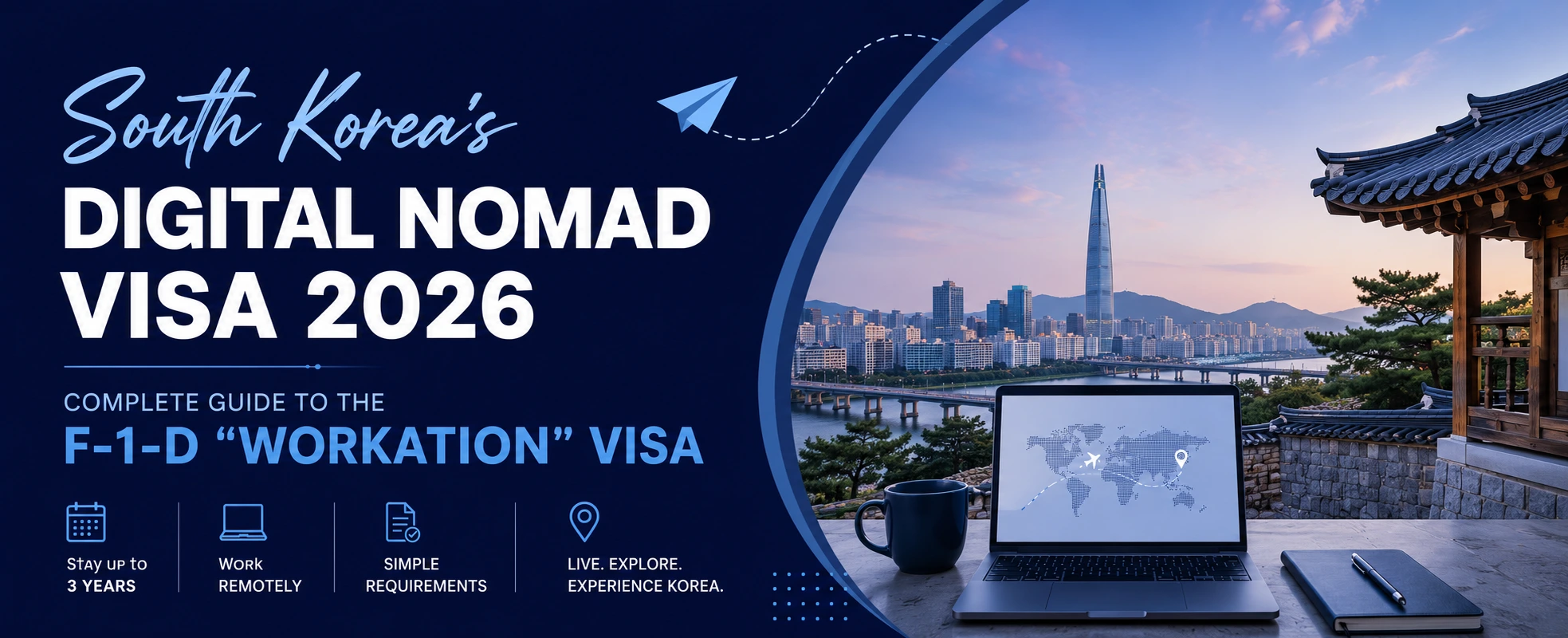
If you’ve been dreaming about sipping coffee in a Seoul café while logging into your remote job, that dream just got a lot more realistic. South Korea has officially rolled out its long-awaited digital nomad visa, and honestly, it’s a much better deal than what was on offer during the pilot phase.
The F-1-D visa, better known as the “workation visa”, went live on June 30, 2026, after more than two years of testing through a pilot program. The Ministry of Justice made it official on July 7, 2026, and the new rules are noticeably friendlier than what early applicants had to deal with. Lower income thresholds, a longer stay, and a real incentive structure for people willing to live outside Seoul — this is South Korea actively trying to attract global remote talent, not just tolerate it.
Here’s everything you need to know about the South Korea digital nomad visa before you start packing. And if the eligibility rules or paperwork start to feel overwhelming, that’s precisely what the best immigration consultants in Dubai, UAE, like Trenity Consultants handle every day — a quick consultation can save you weeks of back-and-forth with your local embassy.
The F-1-D visa lets foreign nationals live in South Korea while continuing to work for an employer based outside the country or while running their own overseas business. It’s built specifically for people who don’t need to be physically present in a Korean office to do their job — think software developers, marketers, consultants, designers, and freelancers of every stripe.
The key thing to understand is what makes this visa different from every other long-term Korean visa. Work visas, student visas, and family-based visas all require some kind of local tie — a Korean employer, a Korean school, or Korean relatives. The digital nomad visa skips all of that. You don’t need a job offer in Korea. You don’t need to enroll anywhere. You just need to prove you’re already gainfully employed abroad and can support yourself while living in the country.
| Feature | 🔹 Pilot Program (2024–2026) | ✅ Official Visa (From June 30, 2026) |
|---|---|---|
| Maximum Stay | Up to 2 years | Up to 3 years |
| Income Requirement | 2× Korea's GNI per capita for everyone | Tiered by age and residence location |
| Regional Incentives | None | Lower thresholds outside Greater Seoul |
| Processing Time | 10–15 business days | Approximately 10 business days to 3–4 weeks |
The biggest complaint about the pilot was the income bar. Requiring every applicant to earn double the national GNI per capita locked out a lot of younger freelancers and early-career remote workers, even highly skilled ones. The government clearly listened, because the updated rules make the visa much easier for more people to qualify for.
To apply for the South Korea Digital Nomad Visa, the F-1-D visa, you generally need to:
This is where the 2026 update really stands out. Instead of a flat rule for everyone, South Korea now uses a tiered system based on age and location:
If you’re applying under the reduced threshold, you’ll need to prove you plan to live outside Greater Seoul for at least a month — a lease agreement or confirmed booking at approved lodging usually does the trick.
One more detail worth flagging: only the main applicant’s income counts toward the requirement. If you’re bringing a spouse, their income can’t be combined with yours to hit the threshold, even though they’re allowed to join you on the visa.
The visa is issued for one year initially and can be renewed annually, if you continue to meet the eligibility requirements. Under the new rules, the total stay has been extended from two years to three years from your first entry into Korea — a meaningful upgrade for anyone who wants to settle in and experience the country long-term rather than treating it as a short stopover.
Getting your paperwork in order is honestly the most tedious part of any visa process, and this one is no exception. Here’s what applicants typically need to submit:
Depending on where you’re applying from, embassies may ask for slightly different paperwork, so it’s worth checking with your local Korean consulate before you submit anything. This is usually where things get tricky for first-time applicants — a single missing apostille or an outdated bank statement can delay your file by weeks. If you’d rather not risk it, working with experienced immigration consultants like Trenity Consultants can help you get your document checklist right the first time.
Get in touch with Trenity Consultants for a personalized document review before you submit.
This threshold affects:
If you’re sponsoring someone, double-check that the nominated position actually meets the new threshold before you apply. Getting this wrong doesn’t just cost money—it can affect visa eligibility altogether, which is exactly the kind of detail Australia skilled migration consultants are trained to catch before it becomes a problem.
Each of these steps sounds simple on paper, but small errors — a wrong form version, a missed appointment slot, an insurance policy that doesn’t quite meet the coverage minimum — can set your application back by months. This is exactly why so many applicants choose to go through experienced immigration consultants instead of navigating the process solo. Reach out to the team at Trenity Consultants today and let us handle the paperwork while you plan the move.
What You Can (and Can’t) Do on the Visa
Permitted:
Not permitted:
Breaking these rules — or seriously violating Korean law more broadly — can get the visa revoked, so it’s worth taking the boundaries seriously.
South Korea isn’t just opening its doors out of generosity. This is a deliberate play to attract skilled global talent, especially into regions outside Seoul that have been losing population. By offering meaningfully lower income requirements to younger remote workers willing to live outside the capital, the government is essentially using the digital nomad visa as a regional development tool — and remote workers get a genuinely appealing lifestyle upgrade in exchange.
The Ministry of Justice has framed the visa as part of a broader strategy to encourage global professionals to experience the country and, ideally, consider Korea as a longer-term base rather than just a temporary stop.
For remote workers, the appeal is obvious: excellent infrastructure, high-speed internet nearly everywhere, an affordable cost of living outside central Seoul, rich food and culture, and now, a visa pathway that doesn’t punish you for being early in your career.
Interested in exploring other destinations for remote work? South Korea is one of several countries embracing the digital nomad lifestyle. You can also read our guide to the Top Digital Nomad Visas for 2026 to compare popular destinations across Europe and find the best option for your remote work journey.
South Korea’s digital nomad visa has gone from a cautious, limited experiment to a genuinely competitive offer in the global remote-work visa space. The eased income rules, the extended three-year stay, and the deliberate push to get remote workers living outside Seoul all point to a government that’s serious about keeping this program growing.
If you’ve been eyeing Korea as your next base — whether for the food, the culture, the tech scene, or just a change of scenery while you keep working your regular job — this is probably the best window there’s been to make the move official.
That said, visa rules can shift again, and eligibility tiers, income thresholds, and documentation requirements are the kind of details you would rather not get wrong. Partnering with the best immigration consultants in Dubai, UAE takes the guesswork out of the process and gives you a much better shot at approval on the first try. Contact Trenity Consultants today for a free eligibility assessment and start your South Korea digital nomad journey the right way.
Choose your nearest office and visit your local country page for personalized immigration guidance.
Share:








Sign up for a Newsletter